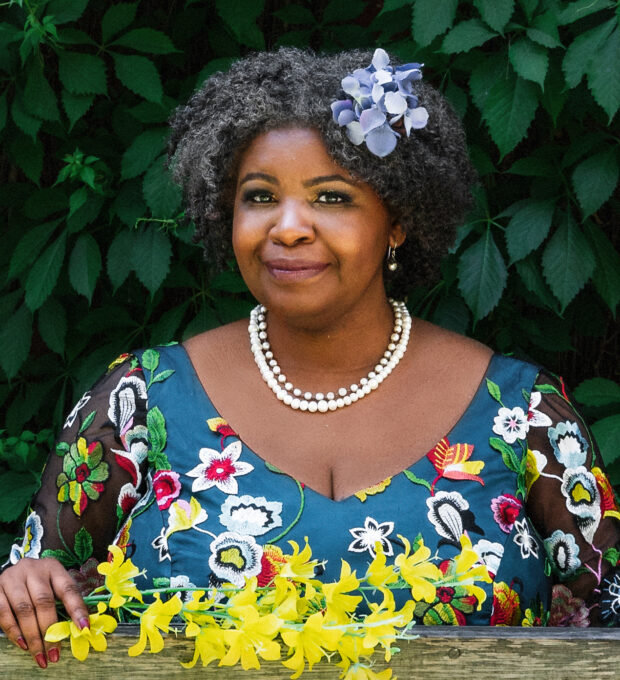
"Leading Creatively" by Don Ryun Chang
15.10.2026 Editorial
More than twenty years ago, Don Ryun Chang proposed "Leading Creatively" as a collective vision tagline for Icograda, now the International Council of Design. In this essay, he returns to that phrase to reflect on four capacities that distinguish designers who keep shaping the field: discernment, unlearning, leadership as a design act, and relevance as earned ground.
Leading Creatively: On the capacities that keep designers and communicators relevant in a shifting creative landscape
By Don Ryun Chang, Former President of the International Council of Design (2007–2009), Professor, Yonsei University, Director, BME
More than twenty years ago, while serving on the board of Icograda, now known as ICoD—the International Council of Design—I proposed the phrase Leading Creatively as a collective vision tagline for the organization.
The international design profession did not share one visual language, methodology, or cultural perspective. What united it was a belief that design could contribute to cultural understanding, professional development, and progressive change.
In that context, Leading Creatively did not describe the aspirations of a single individual. It expressed the collective capacity of an international design community to shape the direction of its own profession.
Looking back, I realize the phrase described far more than an international organization. It anticipated a broader question that has become increasingly relevant throughout my own career:
What does it actually mean to lead creatively?
At some point in every creative career, the most important question changes.
It is no longer simply:
What can I create?
It becomes:
What kind of judgment am I developing, and how can it help others produce more meaningful work?
This transition arrives gradually—through projects that cannot be resolved by technical skill alone, teams that need direction more than instruction, and clients who require interpretation as much as execution. The designer or communicator who navigates this transition successfully does not simply become more experienced.
They become a different kind of practitioner.
Leadership in creative practice is not merely a promotion.
It is redefining what practice itself means.
Creative leadership is never purely personal. It is relational—formed through shared values, productive disagreement, and the ability to connect people and ideas across disciplines, organizations, and cultures.
Design has historically celebrated the individual author. Yet much of today's most consequential creative work is collective, systemic, and distributed across institutions, technologies, and fields of expertise.
The creative leader therefore does more than originate ideas. They frame questions, clarify intentions, align diverse perspectives, mediate differences, and sustain coherence over time.
Across academia, consulting, and international design organizations, I have come to believe that four enduring capacities distinguish those who continue to shape the field from those who simply remain within it.
Creative management increasingly depends not only on what we produce, but on the quality of judgment and creative capacity we enable in others.
I. Discernment Beyond Production
The first shift is from production capability toward discernment—the ability to recognize meaningful differences and explain why one direction matters more than another.
Technical and visual proficiency remain essential. But creative leadership begins where proficiency alone is no longer enough.
A leader must understand not merely which idea is better executed, but which carries greater meaning, responds more honestly to its context, and possesses the capacity to remain coherent across different media, collaboration, and moments.
My own understanding of this began before I became a designer.
I initially studied painting and spent long periods frustrated by the effort to discover my own creative identity. I was learning to make images, yet I did not understand where my work belonged within the larger landscape of art, culture, and ideas.
I therefore began studying art history as a secondary field. My courses covered ancient and modern art, architecture, and Indigenous cultures, including those of Peru. I encountered Manet, Barnett Newman, and Jackson Pollock, along with architects ranging from Walter Gropius to Frank Gehry.
I learned to distinguish Art Nouveau from Art Deco, Abstract Expressionism from other modern movements, and the International Style from the architectural languages that both preceded and challenged it.
At the time, I believed I was simply expanding my knowledge. Only later did I realize that I was building an internal system of comparison—learning to recognize differences in intention, structure, cultural context, and meaning.
Looking back, that education shaped my development as a designer and creative director more profoundly than mastering any individual technique ever could.
My creative identity emerged not by narrowing my attention, but by expanding the range of ideas I could connect.
Discernment develops in precisely this way: through broad exposure, accumulated experience, and the willingness to form and articulate thoughtful positions.
It is not enough for a leader to say, "This direction feels stronger." They must articulate why it is stronger and help others understand how that conclusion was reached.
Unexplained judgment becomes authority by assertion.
Articulated judgment becomes a resource through which others learn.
II. Unlearning as Renewal
The second attribute is the willingness to unlearn.
Every experienced practitioner develops mental models about audiences, communication, media, and organizations. These models allow us to work with speed and confidence.
Yet every mental model carries the assumptions of the era in which it was formed.
The danger is not experience itself.
The danger is allowing experience to harden into certainty.
Creative leaders must distinguish between enduring principles and inherited habits. Principles continue to guide us. Habits sometimes need to be revised—or released.
This is different from chasing trends.
Unlearning requires asking a more difficult question:
Which parts of my knowledge still illuminate the present, and which now prevent me from seeing it clearly?
Artificial intelligence has accelerated this challenge. As technical capabilities become increasingly democratized, the distinguishing value of experienced practitioners shifts away from execution alone toward interpretation, discernment, ethical judgment, and the ability to integrate knowledge across disciplines.
The future advantage of creative leaders may lie less in producing more ideas than in deciding which ideas deserve to shape the future.
Some of the most generative moments in my own career have come not from acquiring a new technique, but from recognizing that a familiar framework was no longer adequate.
The capacity to unlearn does not diminish experience.
It keeps experience alive.
III. Leadership as a Design Act
The third attribute is to understand leadership itself as a creative act.
To lead a design team, brand program, academic studio, or institution is to design the conditions within which other people do their best work.
Those conditions include clarity of purpose, the quality of critique, the distribution of authority, the permission to question assumptions, and the manner in which disagreement is handled.
Creative culture does not emerge by accident.
It is designed—whether intentionally or not.
Viewed in this way, leadership requires many of the same capacities as design itself: empathy, systems thinking, sensitivity to context, and the ability to hold complexity without resolving it too quickly.
It also requires generosity—the willingness to invest in others, share ownership, and create room for intelligent risk.
Generosity does not mean lowering standards.
Strong creative cultures combine openness with rigor. People must be able to challenge ideas without diminishing one another and revise their positions without losing credibility.
A leader's most important contribution may therefore be least visible in the final artifact.
It may reside in the confidence of a younger practitioner, the coherence of a multidisciplinary team, or the emergence of an idea that no individual could have produced alone.
The more effectively one leads, the less necessary it becomes to claim authorship for everything that follows.
IV. Relevance as Earned Ground
The fourth attribute concerns relevance—but not in the way the word is usually understood.
Relevance is not granted by staying current.
It must continually be earned, defended, and renewed through the quality of one's contribution to a professional community.
A practitioner can remain highly visible while gradually becoming peripheral. Titles accumulate. Invitations continue. Credentials expand.
Yet their influence over the future direction of the field quietly diminishes.
The difference between visibility and relevance lies in whether others are genuinely changed by an encounter with your thinking.
This requires more than keeping pace with new developments.
It requires having a position—a distinct point of view that others must engage with, whether they agree or disagree.
A practitioner without a position contributes presence.
A practitioner with one contributes direction.
In professions shaped by accelerating technological and cultural change, the temptation is to perform relevance rather than earn it—to adopt the language of the present without the depth that gives it meaning.
Creative leaders resist this temptation.
Their most enduring contribution is not alignment with wherever the field currently stands.
It is the capacity to move it somewhere it has not yet been.
Relevance, in this sense, is not about staying in the conversation.
It is about becoming someone the conversation cannot afford to ignore.
From Individual Achievement to Collective Capacity
Taken together—discernment, unlearning, leadership as a design act, and relevance as earned ground—these four capacities describe more than professional skills.
They describe a way of working with knowledge, experience, and responsibility.
The mature practitioner must hold experience with enough conviction to provide direction, enough humility to revise it, and enough generosity to strengthen others.
Leading creatively does not mean possessing every answer.
Nor does it require abandoning technical mastery, individual authorship, or personal vision.
It means recognizing that the highest expression of creative experience may ultimately lie not in producing more work oneself, but in enabling better judgment and greater creative capacity in others.
Looking back, the phrase Leading Creatively was never simply a statement for an international design organization.
It described a way of thinking about professional life itself.
The ultimate measure of creative leadership is not the work that carries your name.
It is the people, the ideas, and the institutions that continue to evolve because you helped make them possible.
ABOUT THE AUTHOR
Don Ryun Chang served as President of Icograda (now the International Council of Design) from 2007 to 2009 and on its Executive Board from 2003 to 2011. A leading figure in branding and design, he taught for 25 years at Hongik University in Seoul, where he was also Dean of the Graduate School of Film, Media and Communications, and now teaches at Yonsei University. He was CEO of Interbrand Korea, Lead Chair of the International Design Alliance (IDA), Organising Chair of the 2015 Eeum Design World Congress in Gwangju, and Design Chair for the PyeongChang 2018 Olympic Winter Games, for which he received the Presidential Medal of Korea. His books include Transbranding in the Trans Age and Integrated Brand Communications.
relatedarticles
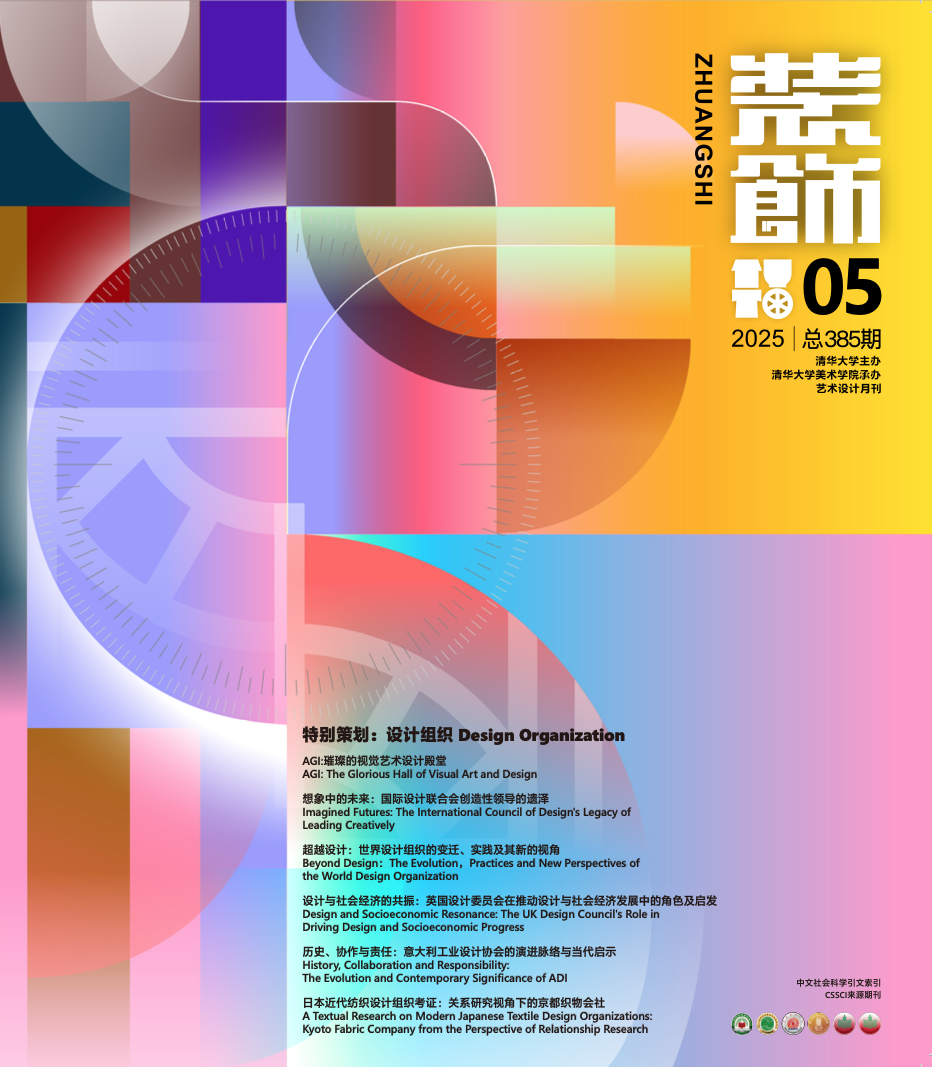
Imagined futures: ICoD’s legacy of leading creatively

ICoD exclusive interview with kyle rath on design and AI

robert l. peters: guiding the future of design