The Spaces In Between: ICoD Announces International Design Day 2026 Theme
26.01.2026 ICoD news
What happens between us matters. Design is often understood through objects, outputs, and outcomes. Yet its most profound impact lives in the physical, digital, and emotional spaces where human connection is made possible.
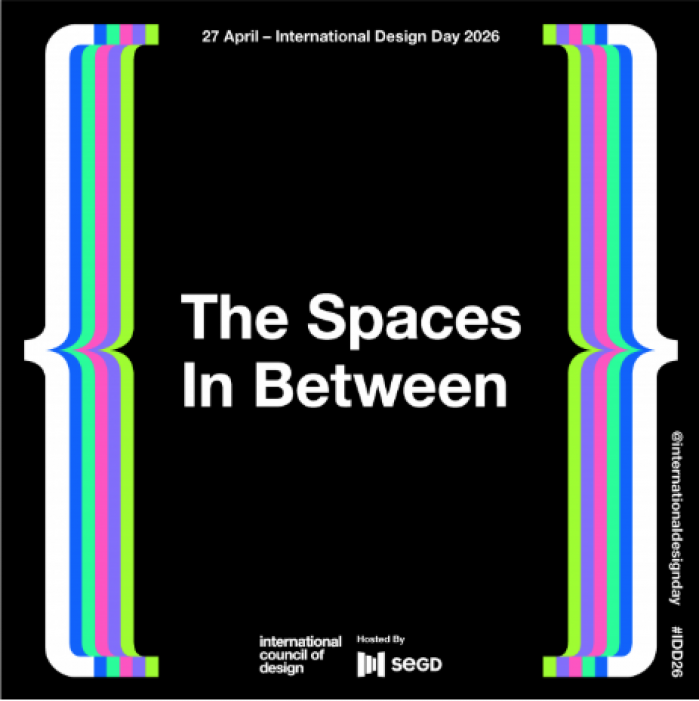
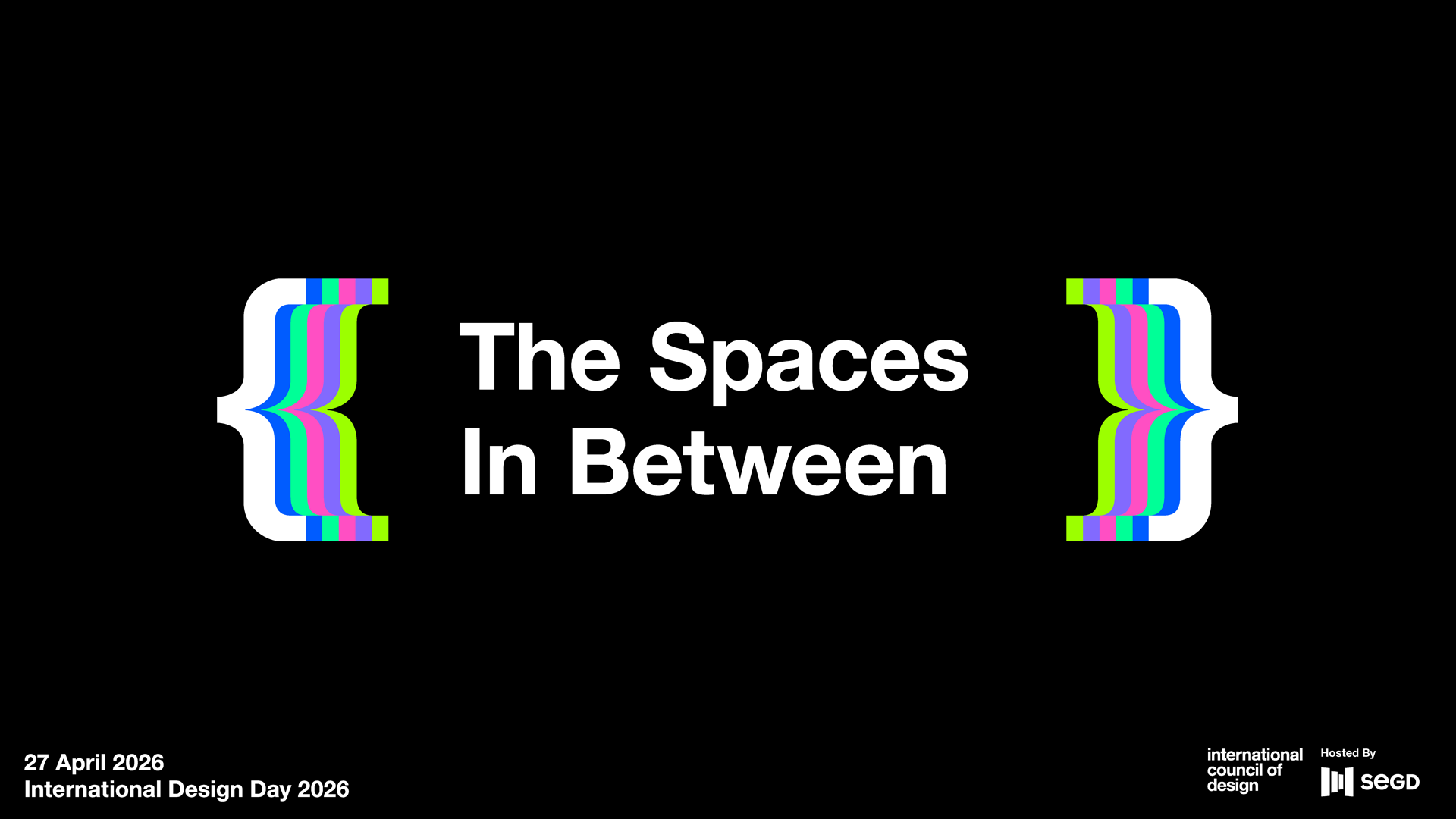
This year’s International Design Day theme, The Spaces In Between, hosted by the Society for Experiential Graphic Design (SEGD), invites designers to focus on these thresholds where ideas become experiences, where individuals become communities, and where design shapes how we belong, relate, and coexist.
Why the spaces in between matter
Design isn’t just what we make. It’s what happens between people in the physical, digital, and emotional spaces where human connection is made possible. These are the thresholds where design mediates how we meet, understand, and care for one another.
Human relationships are rarely formed through singular moments or grand gestures. They are shaped gradually, through transitions, shared attention, pauses, and encounters that often go unnoticed. These in-between spaces—where people arrive, wait, navigate, listen, or hesitate—quietly influence how we belong and how we move through the world together.
Design plays a powerful role in shaping these moments. Whether intentional or accidental, design structures how connection unfolds. It determines who feels welcome, who feels excluded, and how meaning is exchanged across difference. And yet, these spaces are often the least discussed, least measured, and least consciously designed.
The Spaces In Between asks designers to slow down and look more closely at the thresholds where connection is formed, and where it can just as easily fracture.
Design Beyond Objects and Outcomes
Design is frequently evaluated by what can be measured: efficiency, innovation, sustainability, and market success. These criteria matter. But on their own, they rarely account for how design is experienced, remembered, or felt.
Design does not end at the edge of an artifact. It continues into experience, behavior, emotion, and memory.
A poster can help a movement find its voice.
A street sign can guide a stranger home.
A museum experience can spark empathy.
A garment can celebrate identity.
A product can restore dignity through function.
A digital space can invite participation.
Across scales and disciplines, design shapes how we belong, communicate, and coexist. What happens between people before, during, and after an interaction is just as meaningful as the object itself.
This theme challenges designers to consider how their work facilitates genuine connection, not just efficiency, but quality of human connection. It invites designers, educators, and leaders alike to look beyond outcomes and toward the shared experiences that bind us, asking not only what design achieves, but how it connects us.
Transitions, Thresholds, and Meaning
Design lives in the in-between, the invisible intervals where ideas become experiences and strangers become communities. These are the thresholds where we negotiate meaning: between creativity and care, between past and future, between what divides us and what connects us.
The spaces in between are often sites of transition. They include physical thresholds such as entrances, pathways, borders, and queues, as well as digital interfaces and emotional moments of uncertainty, arrival, or first encounter. These spaces are rarely neutral.
They can create friction or flow.
They can heighten vulnerability or build trust.
They can reinforce power structures, or gently disrupt them.
Designers shape these moments whether they intend to or not. The Spaces In Between invites designers to take responsibility for how these transitions are designed, and for whom.
Why It Matters Now
We live in an age of constant communication and increasing disconnection. From our neighborhoods to our networks, the spaces that bring people together are under pressure. Digital tools allow us to communicate instantly, yet many experience isolation, polarization, and fatigue. Public spaces are contested. Shared systems are strained. Speed, scale, and efficiency often leave little room for care, listening, or nuance.
Design operates within these tensions.
Rather than offering simple solutions, The Spaces In Between encourages designers to ask deeper questions:
Where does connection truly happen in this system?
Where does it break down?
Who is included, and who is left navigating alone?
What assumptions are embedded in the spaces we design?
Design has the power to rebuild the spaces that bring people together. It shapes how we move through our cities, how we share ideas, how we care for one another, and how we imagine what comes next.
Design as a Practice of Relationship
Design not only shapes things; it shapes how we relate.
Every design decision carries values about who is considered, what is prioritized, and whose experiences matter. In this way, design is inherently relational.
The Spaces In Between positions designers not only as makers, but as facilitators of connection, responsible for creating conditions where dialogue, participation, and empathy can emerge. It asks designers to listen as much as they shape, and to recognize that those most affected by a design often hold essential insight into how connection can be strengthened.
A Global Invitation
The Spaces In Between is a global invitation to designers, educators, city leaders, and changemakers everywhere—to design for connection. To use creativity as common ground. To make every street, screen, and shared space a place where people belong.
It is also an open framework. Each participant is invited to build the story forward:
Design connects us… to belong.
Design connects us… to care for one another.
Design connects us… to imagine better futures.
Design connects us… to listen.
Design connects us… to act.
Because when design bridges the spaces between us, we do more than solve problems.
We shape relationships, we strengthen communities, and we build the future—together.
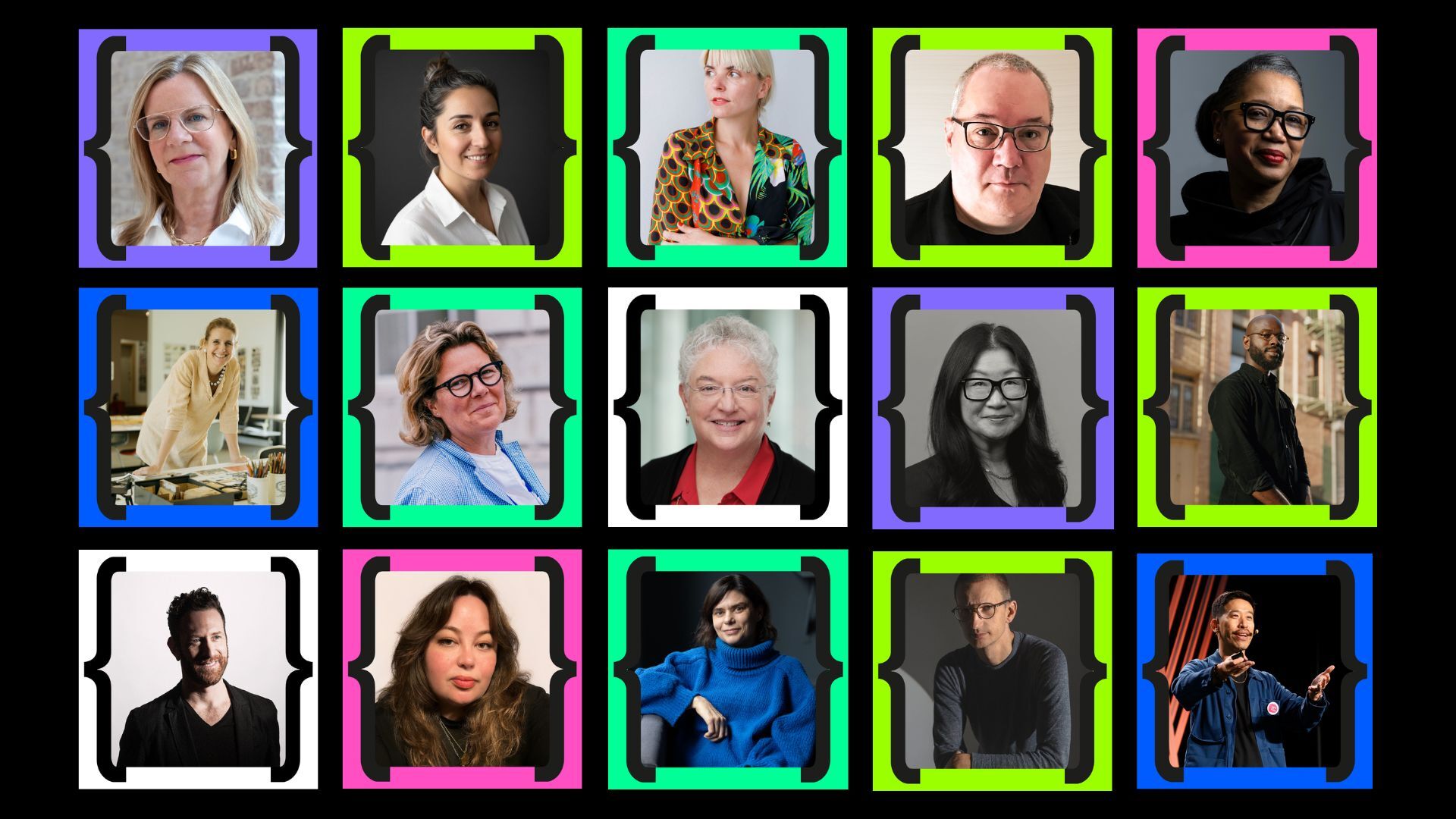
 Pictured left to right: Aki Carpenter, Traci Sym, Nu Goteh, Cybelle Jones
The Team Behind the Theme
The IDD2026 theme was developed through a collaborative process led by SEGD, bringing together members of its Board Brand Committee and staff in close dialogue with ICoD. The process reflected a shared excitement and commitment to advancing a global conversation about the role of design in connecting people across cultures, disciplines, and lived experience.
The group was chaired by Aki Carpenter, SEGD Board President and Vice President and Chief Creative Officer of RAA, whose work spans mission-driven museums and cultural institutions worldwide. Contributors included Traci Sym, SEGD Past President and Principal of plus & greater than, known for post-disciplinary practices that reconnect culture and place, and Nu Goteh, SEGD Board Member, Principal of Room for Magic, and recipient of the 2025 Cooper Hewitt National Design Award for Emerging Designer of the Year.
The theme was stewarded by Cybelle Jones, CEO of SEGD, whose nearly three decades designing experiences have centred the power of creativity to foster dignity, empathy, and shared meaning. Together, the group shaped a theme that reflects the evolution of design practice—one that positions designers not only as makers, but as facilitators of connection and care.
SEGD is honoured to collaborate with ICoD in hosting International Design Day 2026 and looks forward to engaging designers worldwide in a meaningful exchange on how design can strengthen human relationships and collective futures.
IDD2026 Visual Identity
 Holmes Studio Founder and Creative Director Lucy Holmes
The visual identity for International Design Day 2026 was developed by Holmes Studio, led by Founder and Creative Director Lucy Holmes, an SEGD Board Member and internationally recognised designer. Holmes Studio brings a strategic, human-centred approach to the identity, translating the theme’s focus on connection, transition, and shared space into a flexible visual system designed for global participation. The studio’s recent work includes exhibitions for the British Museum, the London Museum, and an award-winning exhibition on David Hockney.
International Design Day 2026 continues ICoD’s long-standing commitment to advancing design as a cultural, ethical, and social practice—one that responds to the complexities of our time and invites designers everywhere to contribute to a more connected world. Further details on participation, toolkits, and global events will be shared via the International Council of Design and International Design Day channels.
relatedarticles
PM2026
International Design Day 2026 Recap: The Spaces In Between
ICoD finds a new home in Vilnius

International Design Day 2026: Exploring “The Spaces In Between”