Imagined futures: ICoD’s legacy of leading creatively
04.06.2026 Editorial
Former ICoD President Jacques Lange’s article delves into ICoD’s historical and recent activities, emphasising its global role in advancing the design profession. It addresses key questions posed by diverse audiences, such as the significance of professional design organisations, the relevance of history, demographics, and identity, the profession’s role in global and regional contexts, and how we respond to future challenges by empowering designers. The article also draws on the visionary agendas established at the founding conference in 1963 and General Assembly in 1964, demonstrating their enduring relevance to the profession today.
A longer version of this article was originally published in Chinese in Zhuangshi, #05, 2025.
Zhuangshi is a design and art journal published by the Academy of Arts & Design at Tsinghua University, China.
Following the devastation of World War II (WWII), countries worldwide implemented diverse infrastructure reconstruction and development strategies. In Europe, parts of Asia, North and East Africa, the focus was primarily on rebuilding cities, towns, and infrastructure from ruins. However, it also required breathing life back into destroyed economies. Elsewhere, efforts centred on restoring disrupted economic infrastructure like factories repurposed for wartime production and then returned to pre-war functions or new technological applications. Additionally, there was a push to accelerate industrial manufacturing and marketing capabilities to stimulate growth, trade, and competition.
Design, like most other professions, played an essential role in these strategies. A prime example is the Design Council, established in 1944 by Winston Churchill’s wartime government. Its original mission was to “promote by all practicable means the improvement of design in the products of British industry” [1]. Over the next few decades, the Design Council evolved into the national strategic advisor for design to both government and private sectors in Britain. Today, it’s widely regarded as one of the world’s most respected design promotion bodies.
Many design education institutions and national professional bodies were established decades, some even over a century before WWII. These organisations aimed to develop and nurture the design industry, ultimately making it a respected profession. Notable examples include the Oslo National Academy of the Arts in Norway, founded in 1818; the Royal College of Art in the UK, established in 1837; Konstfack University of Arts, Crafts and Design in Sweden, founded in 1844; the Rhode Island School of Design in the USA, established in 1877; and the precursors of the Association of Hungarian Fine and Applied Artists in the late 19th century. Other organisations include Ornamo Art and Design Finland, founded in 1911; the American Institute of Graphic Arts (AIGA), founded in 1914; Design Austria, founded in 1927; and Grafia in Norway, founded in 1933 [2]. These institutions and organisations remain relevant and actively promote the status and standing of design professions both nationally and internationally.
By the late 1950s and early 1960s, the post-WWII environment fostered the creation of international design profession bodies. Key organisations included the International Council of Societies of Industrial Design (ICSID, now the World Design Organization, WDO) founded in 1957, the International Council of Graphic Design Associations (Icograda, now the International Council of Design, ICoD) established in 1963, as was the International Federation of Interior Architects/Designers (IFI). These organisations were visionary, aiming to be non-partisan and promote shared ideals for the design professions to navigate the complex international geopolitical landscape of the time.
This article delves into the work, development and review of ICoD’s historical and recent activities. It emphasises its global role in advancing the design profession and addresses key questions posed by diverse audiences over the years. These include the significance of professional design organisations, the relevance of history, our demographics and identity, the profession’s role in global and regional contexts and how we respond to future challenges by empowering designers. The article draws on the visionary agendas established at the founding conference in 1963 and General Assembly in 1964, demonstrating their enduring relevance to our profession today.
WHY DO PROFESSIONAL DESIGN ORGANISATIONS MATTER?
Alpay Er [3] argues that international design organisations like ICoD have been discussed in design circles primarily for their practical benefits and the impact of their events and programmes. However, they have rarely been the subject of a systematic scholarly debate with historical and critical perspectives. The design discourse has always been preoccupied with objects, images, products, brands, and individual designers, rather than the nature of professional interactions, networks, social structures, organisations, and power relations in design. The term ‘design’ is often interpreted as a noun, referring to material and non-material things, systems, and experiences, rather than as a verb, referring to the process. I believe that the intention of international design profession organisations is to promote the role of design in improving the human and ecological condition, regardless of the specific circumstances.
Ansley, Clark, and Messell [4] contend that international design organisations have traditionally been a vital platform for raising awareness of design issues. Their main role has been advocacy, involving setting design practice and education standards and promoting design’s professional standing.
In this context, it’s important to consider the primary reasons behind the formation and ongoing existence of such organisations. These include building a cohesive international community, establishing a shared definition for key design disciplines, and developing guidelines and policies. They also raise standards for practice, education, and research, provide opportunities for learning and collaboration across borders, and showcase the value and benefits of design to commerce, governments, intergovernmental organisations, and the public. Furthermore, they foster appreciation for designers’ achievements, lobby on their behalf at global decision-making forums, and shape the societal impact of design.
This intricate web defines the management ecosystem of the profession. Over the past six decades, organisations like ICoD have achieved varying degrees of success in tackling these ambitious goals. Due to limited resources and changing priorities, different aims and objectives have been prioritised at different times. These priorities shift from one ICoD Executive Board term (two years) to the next as directed by the organisation’s members at bi-annual General Assemblies.
HISTORY MATTERS
The history of ICoD is woven together by influential figures, significant events, notable locations, and a wealth of ambitious ideas. While many practising designers, educators, and students are unfamiliar with these aspects, many of the world’s most influential designers are integral to the narrative. This section offers a concise historical overview presented in a non-linear format. It highlights key events, topics, programmes, and projects undertaken by the Council, contextualising their ongoing relevance to the design profession.
To avoid confusion with its three historical iterations – the International Council of Graphic Design Associations (Icograda) from 1963 to 2007, the International Council of Communication Design (ico-D) from 2007 to 2013, and the International Council of Design (ico-D [5] and ICoD) – the term ‘Council’ will henceforth be used to refer to the organisation. This is also the legal term used in its Articles of Incorporation and Bylaws.
The early years of the Council’s history are particularly significant for two reasons: the relationship between designers and their organisations and the nature of post-WWII design practice. This includes its operations, technological developments, practitioners’ relationships with clients, and the profession’s role in society.
What stands out about this early period is the visionary leadership of individuals who played a key role in establishing the Council and, by extension, the profession. Their diverse backgrounds, including places of birth, education, design practice, migration, and travel experiences, shaped their worldviews. More importantly, they leveraged these diverse experiences to build extensive collaborative networks of peers across geographical and political boundaries. This collective effort was instrumental in advocating for the professional status of their chosen vocation.
In 1959, Peter Kneebone (1923-1990), a member of the Society of Industrial Artists and Designers’ (SIAD, now Chartered Society of Designers) international steering committee, proposed creating an international organisation to represent professional graphic design associations worldwide. He firmly believed that collaboration and mutual support among designers would lead to better work and greater positive impact [6]. By 1962, Willy de Majo [7] (1917-1993) and Kneebone collaborated with a small working group from SIAD to develop a blueprint for the organisation’s founding.
The inaugural conference of the Council was held at Watney House in London from 26 to 28 April 1963. This impressive event attracted delegates from 28 design associations across 17 European countries. This is remarkable considering the limited communication methods of the time: phones, telegrams, snail mail, and print media like magazines, newsletters, and newspapers.
The event’s ambitious agenda was met with determination from delegates who aimed to secure immediate results shaping the Council’s future. Several key activities were ratified, including the development of a Code of Ethics and Professional Practice, a Code of Contract and Conditions of Engagement for Graphic Designers, Rules and Regulations for International Graphic Design Competitions, an International Directory of Organisations Concerned with Graphic Design, and the publication of a News Bulletin [8].
In September 1964, the first General Assembly (GA) of Icograda Members (the Council) convened in Zurich, Switzerland. Over 200 delegates from 23 associations across 17 countries attended. The GA ratified the organisation’s aims and objectives and agreed to establish a permanent secretariat [9], an archive and library, regular publications, a student scholarship programme, and the development of a unified system of typographic measurements. These are key features. The latter was a major initiative with a lasting impact on professional practice worldwide [10].
Other ratifications include the adoption of an organisational chart and draft Articles of Incorporation and Bylaws, which have guided the Council’s governance and activities ever since. They define and establish governance frameworks, legal status, mandates, policies for administration and secretariat infrastructure, financial management, design advocacy, networking and collaboration, strategies for programming, membership management, development opportunities for member organisations, and best practice guidelines. These aspects remain key to GA agendas over six decades later.
The GA also established that the Council’s Executive Board comprises individuals duly nominated and elected by Members at biennial GAs. This Board manages the Council’s business between GAs and reports directly to the Members. Board members are chosen for geographical representation, expertise in various design disciplines, and experience in professional educational and promotional organisations. They serve voluntarily, dedicating their time and expertise to advance the Council’s mandate.
Another key task the 1964 GA tackled was developing a shared definition of the Council’s purpose. This definition has evolved over time to reflect current circumstances and a summary states: ICoD is a non-profit, non-partisan, member-based network of independent organisations and stakeholders working within the multidisciplinary field of design. Its membership includes entities of national significance and prominence such as professional design associations, design promotion bodies, and design education institutions. These members collectively represent the global design community and foster high-level discussions about design’s pivotal role in society, culture, the economy, and the natural environment.
Other significant highlights include the establishment of the Icograda Signs and Symbols Commission. This led to a close collaboration with the International Chamber of Commerce in 1965 and later with the International Organization for Standardization (ISO). The relationship with ISO grew exponentially over the years, resulting in numerous collaborative projects. For example, in 1979, a student project involving 20 schools from thirteen countries designed graphic symbols for public information. This project produced over 1,000 symbol prototypes and led to the development of ten new international standards.
In 1966, Bled, Yugoslavia, hosted the second GA and Congress, as well as the inaugural International Students Seminar. These events were significant as they reaffirmed the Council’s international non-partisan stance during the Cold War. At the GA, members ratified the establishment of four commissions. These commissions defined the Council’s primary activities for several years, covering International Signs and Symbols, International Standardisation, Education and Professional Practice, and Documents.
Members ratified several key documents, including Rules and Regulations for International Graphic Design Competitions, the Honourarium for Judges of International Competitions, a revised Code of Ethics and Professional Practice, and the Code of Contract and Conditions of Engagement for Graphic Designers. These documents standardise various aspects of professional practice internationally, and their regular updates remain in use today. The importance of guidelines governing competitions and awards grew significantly from the late 1960s when the Council implemented an endorsed programme ensuring ethical practices, particularly for biennial and triennial competitions, based on competition principles. This programme was later expanded to cover other competitions and initiatives involving commercial gain to prevent unfair exploitation and protect designers’ intellectual property.
In 1968, representatives of Icograda and the International Council for Industrial Design (ICSID, now WDO) first met to explore ways of fostering collaboration between the two councils. This led to the creation of the ICSID/Icograda Liaison Committee in 1975. Over the years, this relationship evolved into what is now known as the ‘three sisters’ – ICSID, Icograda, and the International Council of Interior Architects/Designers (IFI). They jointly hosted a symposium on ‘Design for Need’ in 1976 and presented joint world congresses in 1981, 1987, 1993, 1999, 2005, 2011, and 2015. The ‘three sisters’ also collaborated on various publications, including the World Directory of Schools Offering Courses in Design in 1983 and 1985, the substantially revised Competition Regulations and Guidelines in 1985, the Icsid/Icograda Report of Women in Design in 2005, and the Joint Statement on Speculative Practices in 2011. This latter statement was a response to the growing trend of open calls for speculative competitions for global events and other international initiatives.
Between 1999 and 2002, the ‘three sisters’ conceptualised the formation of the International Design Alliance (IDA) and the launch of the Host City Project to create a joint secretariat [11]. The 2003 Call for Bids for the joint secretariat drew proposals from fourteen cities worldwide. Ultimately, Montréal was chosen to host it, and in 2005, a ten-year sponsorship agreement was signed with Montréal International. This marked one of the largest single sponsorships for the design profession and was renewed in 2016.
In 2007, the IDA launched the World Design Capital® programme and initiated the IDA World Design Survey Pilot Project. This latter project received advisory support from the UNESCO Centre for Statistics and UNCTAD. However, in 2009, ICSID and IFI declined Icograda’s proposal for a more unified IDA comprising platforms representing various design sectors. Their decision stemmed from strategic differences and incompatible organisational cultures, ultimately leading to the Alliance’s dissolution in 2013. Despite this, the ‘three sisters’ continue to collaborate today on an affiliate basis.
In 1972, Icograda received consultative status from UNESCO and continued collaborating on various advocacy and research projects over the years. That same year, UNESCO tasked Icograda with conducting an international study on graphic design education. This led to the first Icograda Student Seminar on Visual Communication being held in London in 1975. While similar events had occurred under different names and locations earlier, this marked the official start of the Icograda Student Seminar series. London hosted 25 annual Icograda Student Seminars until 1999. In the early 2000s, these seminars were replaced by Student Workshops, which became part of the Council’s Design Week programme held globally.
The first Icograda Congress dedicated solely to design education took place in Düsseldorf in 1974. The Council’s mandate for design education expanded significantly, ultimately leading to the creation of the Icograda Education Network (IEN) in 2002. By 2007, IEN members gained limited voting rights at the Council’s GA in La Habana. The Education Member category experienced rapid growth in the late 2000s and, by 2004, represented the majority of the Council’s membership.
In 1998, Asian members of the Council introduced the concept of an Icograda Design Education Manifesto. Led by Ahn Sang-soo (South Korea), Sharon Helmer Poggenpohl (USA), and Marian Sauthoff (South Africa), the Manifesto materialised in 2000 following extensive consultation and collaboration with experts from the Council’s membership. Unanimously adopted by the GA and published in 17 languages, the Manifesto was subsequently updated in 2010. Its impact has been profound, particularly in shaping minimum standards, relevant curricula, and appropriate naming conventions for design programmes and qualifications worldwide. For instance, by the early to mid-2000s, ‘communication design’ had become the preferred professional descriptor in most regions instead of ‘graphic design’.
By the mid-1970s, the Council’s international reach expanded significantly beyond its traditional European base, leading to hosting events across various continents. In 1975, the Council held its second education conference in Edmonton, Canada; its first World Congress in Chicago, USA, in 1978; and the Icograda Latin America Conference in Guadalajara, Mexico, in 1980. In 1987, the Icograda/UNESCO Seminar: Graphic Design for Development took place in Nairobi, Kenya; the Icograda/JAGDA Pan-Pacific Design Congress, in Tokyo, Japan, in 1989; the 1997 Icograda Congress and GA in Punta del Este, Uruguay (the first in the southern hemisphere, attracting ±1,000 delegates); the Millennium Congress in 2000 in Seoul, South Korea (attracting ±1,600 delegates featuring the first live webcast of a Council event); and the 2001 World Design Convergence Congress and GA in Johannesburg, South Africa (the first in Africa).
In September 2002, the Executive Board embarked on a three-week mission to China to foster the development of professional organisations on the mainland, and engaged with many members of the Asian region at a meeting in Taipei. In 2003, the Council hosted its Congress and GA in Nagoya, Japan (attracting ±3,700 delegates from 48 countries – the best-attended Council event on record); the 2007 Congress and GA in La Habana, Cuba; the inaugural IDA Congress in 2011 in Taipei, Taiwan/Chinese Taipei; the Congress and GA in Beijing, China, in 2009; and in 2018 hosted a Regional Meeting for ASEAN countries in Kuala Lumpur, Malaysia. These events serve as selective examples that illustrate how the Council expanded its reach and inclusivity around the world over the decades.
As previously mentioned, the Council’s priorities shifted over time. For instance, the ICoD Platform Meeting in Montréal in October 2017 covered accreditation/certification, indigenous design heritage, blueprints for lifelong learning for designers, and national design policies. Notably, accreditation/certification and indigenous design heritage were new to the international profession management agendas at the time, though not new to the design discourse. Simultaneously, the Council held its inaugural meeting of Design Weeks, Design Cities, and Design Museums as a pilot, targeting a select group of non-member organisations. This meeting brought together representatives from 15 entities and ten countries and was followed by meetings in Beijing, China, in 2018 and Graz, Austria, in 2019. In 2022, the Special Meetings of design weeks festivals and biennales, design museums, UNESCO-designated Design Cities, design awards, and more were rebranded as the Iridescent Network, a para-member network of ICoD, similar to the International Design Media Network (IDMN).
On 24 October 2017, the Montréal Design Declaration was signed by 18 international organisations representing over a million design practitioners. This historic milestone marked the first time international organisations representing designers, architects, urban planners, and landscape architects united to advocate for design’s potential to tackle pressing global challenges. The declaration culminated in a joint call to action.
Due to limited editorial space, this brief historical summary omits numerous significant Council initiatives such as the Icograda Foundation Poster Auction, awards endorsement programmes, Friend of ICoD, Design for the World, Indigo Project/Network, and the Indigenous Design Charter. The Design Education Lab in China, World Design Day celebrations, and many others also played a crucial role in advancing the Council and the profession. These initiatives deserve a dedicated article exploring their relevance and historical significance.
WHO AND WHAT ARE WE
International footprint
Since 1964, 30 elected executive boards have overseen the Council’s business. The Council has always prioritised geographic representation, evident in the diverse spread of countries represented by elected Presidents. Here’s a list of these Presidents along with the years they assumed office: Willy de Majo (UK, 1964); Knut Yran (Norway, 1966); F.H.K. Henrion (UK, 1968); John Halas (UK, 1970); Kurt Weidemann (Germany, 1972); Walter Jungkind (Canada, 1974); Flemming Ljørring (Denmark, 1977); Peter Kneebone (France, 1997); Stig Hogdal (Sweden, 1981); Raymond Kyne (Ireland, 1983); Jorge Frascara (Canada, 1985); Niko Spelbrink (Netherlands, 1987); Helmut Langer (Germany, 1989); Giancarlo Iliprandi (Italy, 1991); Philippe Gentil (France, 1993); José Korn Bruzzone (Chile, 1995); Guy-A. Schockaert (Belgium, 1997); David Grossman (Israel, 1999 and 2015); Robert L. Peters (Canada, 2001); Mervyn Kurlansky (Denmark, 2003); Jacques Lange (South Africa, 2005); Don Ryun Chang (South Korea, 2007); Russell Kennedy (Australia, 2009); Leimei Julia Chiu (Japan, 2011); Iva Babaja (Croatia, 2013); Zachary Ong (Malaysia, 2017), Johnathon Strebly (Canada, 2019), Ting Xu (China, 2022) and Melike Taşcıoğlu Vaughan (Türkiye, 2024). It is notable that several of these individuals were born, educated, or practised in countries other than their listed residence during their Council tenures. This reflects the fluid nature of the design profession and the resulting creative diasporas.
In 1963, the Council’s founding membership comprised 28 graphic design associations from 17 European countries. Soon afterwards, organisations from the USA, Japan, Canada, and South Africa joined. By 1983, the membership had grown from 31 to 50. In 2001, the Executive Board developed a strategy to recruit new members, particularly from Asia. This led to a membership increase to 80 organisations from 57 countries by 2003 and further expansion to 67 countries by 2005. Membership reached 176 by 2009, including the number of Education Members reaching 80. During the 2009-2011 term, membership peaked at over 200 organisations from 67 countries. However, this sharp increase was partly due to Education Members gaining partial voting status at GAs [12].
In 2013, the GA Members ratified an expansion of the Council’s definition to include diverse design disciplines beyond communication design, making the Council multidisciplinary. Consequently, the official name was changed to the International Council of Design (ICoD) in 2014, and membership growth continued in the years that followed.
On 12 March 2020, the Council announced its initial response and protocols to address the global COVID-19 pandemic crisis. These protocols involved rescheduling events, converting some to virtual platforms, reorganising Secretariat resources, reducing and temporarily halting travel, and refocusing efforts on developing relevant future projects. Consequently, all Council meetings transitioned to virtual formats from 2020 to 2022. This shift impacted the Council’s member organisations and their financial sustainability and activities in the aftermath of the pandemic, mirroring similar experiences among other international professional bodies. By 2024, the Council’s membership had decreased to 113 from 59 countries [13]. ICoD’s leadership has since launched several strategies to rebuild membership numbers to pre-COVID-19 levels.
Who are the Council’s members and how are they constituted?
ICoD is a body of independent member organisations forming a global network. This network shares common aims, objectives, values, and commitments to elevate professional design practice standards. The primary membership comprises three categories with varying voting rights at GAs.
Professional Members are membership-based organisations that have national status or recognition in their respective countries and have a majority of enrolled members (individuals, groups, or companies) who are practising professional designers or those who belong to other areas related to design practice. These individuals or groups’ shared objectives are to influence and raise practice standards of design locally, regionally, or internationally. This category has full voting rights on all agenda points at GAs.
Educational Members are institutions that provide design education and training. They offer a coherent programme leading to nationally recognised certificates, BA or honours degrees, and PhDs. These qualifications are recognised by a national regulatory authority like a department of higher education and training.
Promotional Members are organisations, institutes, museums, festivals, and foundations with national or regional status and/or recognition. Their core activities focus on contributing and promoting design excellence through incubation opportunities, quality testing, award schemes, and programmes that raise standards of practice and education. These programmes also raise awareness among diverse audiences, including commerce, government, and the general public.
Other memberships include Corresponding Entities (provisional members), Affiliates (related international entities), Friends of ICoD (individuals), and the International Design Media Network (IDMN), all with non-voting observer status at GAs.
Representation by numbers
One of the most challenging issues that the Council has faced since its founding is the inability to provide credible statistics that map the global population of design practitioners, the disciplines they work in, their academic qualifications, and the sub-disciplines that they practice. Any advocate in the design sector would agree that this data gap is the main reason for frustration in promoting the profession’s recognition, status, and standing. This affects its reputation with the general public, clients, and at governmental and intergovernmental levels.
Data related to the design sector is largely sketchy and unreliable. For example, ICoD members are required to provide their individual member numbers annually for invoicing. However, this does not accurately reflect actual numbers as the data is not verified. A 1993 media report claimed Icograda represented 40,000 graphic designers across over 60 countries but didn’t explain how this figure was calculated [14]. In 2003, the Council’s administrative records suggest its membership comprised approximately 17,000 individuals, representing the members of member organisations. This figure is plausible given the Council’s official membership of 80 at the time. However, a member survey conducted that same year estimated the actual number of individuals who utilised or benefited from the Council’s activities to be around 250,000. This figure appears realistic for two reasons: firstly, member associations are not required to report or pay fees for retired designers, educators who are not actively practising design, or students. Secondly, the figures align with the Council’s website visitor data at the time, specifically unique visitors rather than hits [15]. These statistics will undoubtedly appear quite different today given the significant increase in visitor numbers to the Council’s website over the past decade. Furthermore, the Council’s membership has become multidisciplinary, leading to a substantial increase in headcount.
Between 2000 and 2020, the Council organised regular regional meetings across the globe as part of its Design Week programme. These meetings differed from those held before the 2000s in format. Members and non-member organisations, design promotion bodies, and education institutions were invited to participate. This fostered networking and membership growth. Interestingly, less than 20% of practising designers subscribed to professional bodies worldwide. It’s likely this figure has dropped further today, given designers now have access to a wealth of resources and can connect with peers online without paying membership fees.
The percentage of designers affiliated with professional associations varies significantly across countries. For example, in 2025 AIGA in the USA boasts over 15,000 members, while Design Austria in Austria has around 1,300 members from various disciplines. Swedish organisation Svenska Tecknare has 1,200 members, and Finnish Grafia boasts over 1,000 visual communication professionals. Hong Kong Designers Association boasts over 1,000 multidisciplinary members, and Croatian Designers Association (HDD) has approximately 100+ members [16].
Some countries are recording more inclusive and reliable statistics through national statistics institutions. For example, Deutscher Designtag e.V., representing design associations and institutions in Germany, recently reported that their organisation comprises 360,000 designers and 60,000 design companies generating an annual turnover of approximately 20 billion Euros [17]. The Design Council (UK) offers support to 1.97 million individuals employed in the UK’s design economy [18]. According to the US Bureau of Labour Statistics, 267,200 graphic designers [19], 92 200 interior designers [20], and 34,000 industrial designers [21] were employed in the USA in 2023.
While other commercial sources analyse data to predict trends in the design industry, their methodologies are often unclear and the validity of their sources and accuracy of results are questionable. For example, Gigexchange’s Industry Analysis Report: The Design Industry estimates the global design industry’s worth at approximately USD350 billion in 2023 and projects a sustained compound annual growth rate of 4-5% over the next five years [22]. IBIS World predicts graphic designers will generate USD19.2 billion in revenue in 2024 [23]. NMSC’s Global Opportunity Analysis and Industry Forecast for 2024-2030 states that the global graphic design market was valued at USD57.5 billion in 2023 [24].
These statistics are somewhat questionable and conflicting but still impressive. Their importance lies in the strength of numbers. Since the mid-1990s, national and local governments have increasingly incorporated design into their official policies, recognising it as a crucial tool for economic and other development.
In this regard, ICoD spearheaded the IDA World Design Survey Pilot Project (WDS) from 2007 to 2010 on behalf of its IDA partners ICSID and IFI. The WDS aimed to map the generic design sector across 12 countries or economic development communities. This pilot project sought to assess the design economy’s contribution and gauge the strategic engagement of design as a socio-economic and cultural developmental imperative at the government level. Several Council members collaborated on the pilot, resulting in reports from Europe, the Asian region, Norway, South Africa, South Korea, and special case reports from Qatar and Ontario, Canada. Furthermore, other Council member countries contributed to the research by pooling national data but not using the WDS’s standardised indicators.
International cooperation
The Council has a longstanding history of collaborating with international organisations focused on design issues. These affiliates agree to mutually promote activities and share common goals to elevate the status of design and designers on a global or regional scale. This includes affiliations with several United Nations (UN) agencies. For instance, the Council maintains affiliations or collaborative status with UNESCO, ISO, WIPO, IFFRO, and UNIDO. Currently, the Council primarily engages with UNESCO concerning data related to the creative economy and UNESCO Cities of Design. It also regularly nominates delegates to serve on Technical sub-committees at ISO, particularly ISO 145, which focuses on graphical symbols.
As mentioned, the Council continues to consult with its sister organisations, the WDO and IFI. It also maintains long-standing partnerships with the Bureau of European Design Associations (BEDA), particularly regarding best practice guidelines, policies, accreditation, and certification, and the creative economy. Furthermore, ICoD and BEDA share several common members.
Other affiliates aligning with the Council’s focus on design practice include the European Union Intellectual Property Office, Association Typographique Internationale (ATypI), International Association of Universities and Colleges of Art, Design and Media (Cumulus – sharing many members with ICoD), Design Management Institute, EIDD – Design for All Europe, European Brand and Packaging Design Organisation, the Women Designers’ Forum, International Society of Typographic Designers (ISTD Ltd), the International Institute for Information Design, The Design Alliance Asia and the Pan-Afrikan Design Institute.
HOW WE EMPOWER DESIGNERS TO THRIVE
Sharing knowledge through meetings
Since its inception, the Council’s activities, advocacy and network development have been underpinned by a variety of meetings. Over the years, the format of these meetings has evolved. While previous sections have covered the types and formats of meetings from 1963 to 2012, this section focuses on the current format introduced since 2012/2013, which draws on practice platforms and specialised communities of interest.
General Meetings bring together Council Members to discuss governance and policy. These include regular Board Meetings attended only by Executive Board members and Secretariat staff, as well as GAs and Annual General Meetings (AGMs) held on alternate years. These are attended by representatives of ICoD Members and invited observers.
Platform Meetings are structured to serve specific member categories. Council Members meet at regular intervals at a designated location to address shared challenges and explore actionable solutions. ICoD’s Educational, Professional, and Promotional Members (along with other non-voting categories) present agendas related to current design professionalism issues across different regions and categories.
Regional Meetings, established in 1980, occur less frequently. These meetings bring together Members and non-Members to discuss the successes and challenges faced by specific geographic regions, whether continental or more regionally focused. The goal is to foster collective action and build a shared cause.
One of the newest Council events is the Iridescent Network Meeting. These meetings are designed to foster collaboration and exchange between various design promotional organisations like biennales, triennials, design weeks, festivals, museums, and cities. They tackle shared challenges and objectives, aiming to enhance international design community collaboration on mutual goals and challenges.
The Council’s spirit has always been rooted in open dialogue. This fosters new collective thinking and encourages beneficial design collaborations.
Professional practice
In 1964, during the first Icograda Congress in Zurich, Switzerland, professional practice issues were paramount. Approximately 200 delegates from 17 countries convened to discuss the theme ‘Commercial Artist or Graphic Designer’. Since then, the Council has consistently maintained that design is a profession distinct from a craft. Similar to architects, doctors, and lawyers, the Council argues that designers have obligations and responsibilities that practitioners must uphold to maintain their professional standing. The title “professional designer” signifies that Council members adhere to a widely agreed-upon code of professional conduct. This code ties their practice obligations to respect their relationships with clients, society, the natural environment, and fellow designers.
The Council also has a long history of developing and publishing white papers; best-practice documents governing the professional conduct of the individual designer; conditions of engagement for designers (client contracts); conditions for the organisation of design awards, design conferences, and design exhibitions; and a professional lexicon, all of which are regularly updated. The Council’s best practice papers aim to establish principles for an international foundation of professional and ethical standards.
One of the most important documents is the ICoD Professional Code of Conduct for Designers. It has been translated into Arabic, English, Japanese, Polish, Portuguese, Spanish, Lithuanian, and Turkish in recent years. To achieve global professional design standing, a shared professional ethos and sense of common cause are essential. Only collective practitioner action can establish a discipline’s professional standing. While the ICoD Code provides a common international set of values and ethics, some Council members also have codes relevant to local or regional practice.
Since the late 1990s, ICoD Members from around the world have addressed the issue of speculative practices, particularly in unethically run competitions that infringe on designers’ intellectual property rights. They have put pressure on the Council to create an official policy, but this has not been feasible due to differing competition laws across member countries. However, the Council has developed an official stance on unpaid work: “The International Council of Design upholds professional design conducted in accordance with accepted standards for fair compensation. It discourages all speculative uncompensated work, including speculative competitions. Such practices undermine the value of design and the professional standing of designers” [25]. To address this further, the Council has added clauses to its Best practices for organising design awards and competition guidelines and Conditions of engagement for designers. Additionally, the Council regularly responds to Member requests for public statements opposing unethical crowd-sourcing and competitions. This includes notable cases such as a crowd-sourced 2020 logo competition for the Olympics Games which garnered significant international media attention.
Sharing knowledge through publications, archives, and unique projects
Many current design professionals are unaware of the Council’s extensive history of publishing newsletters, reports, books, research journals, house magazines, catalogues, videos, and a substantial website in various forms. Each publication served a different purpose and audience but collectively contributed to the growth of the design profession and the documentation of its history. Highlights include Icograda: The First Five Years edited by Wynkyn de Worde (1968); the World Directory of Design Schools and Programmes, published jointly by Icograda, ICSID, and IFI (1985); History of Design Bibliography, edited by Victor Margolin (1987); Graphic Design, World Views: A celebration of Icograda’s 25th Anniversary, edited by Jorge Frascara (1990); Masters of the 20th Century Design: Icograda Hall of Fame (1974-1999), edited by Mervyn Kurlansky (2000); Worldwide Identity: Inspired Design from Forty Countries, edited by Robert L. Peters (2006); and Icograda Education Manifesto 2000 and 2011, among others.
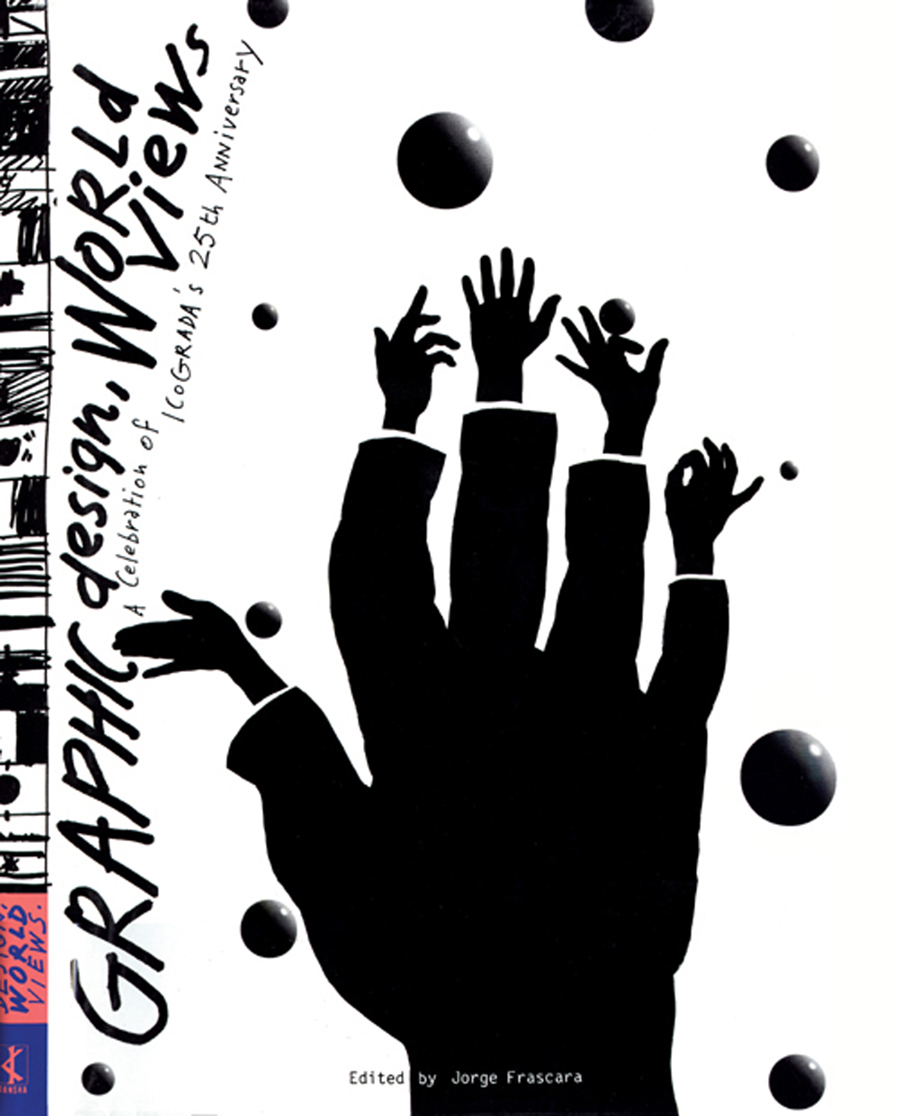
Cover of "Graphic Design, Global Perspective: ICOGRADA 25th Anniversary"
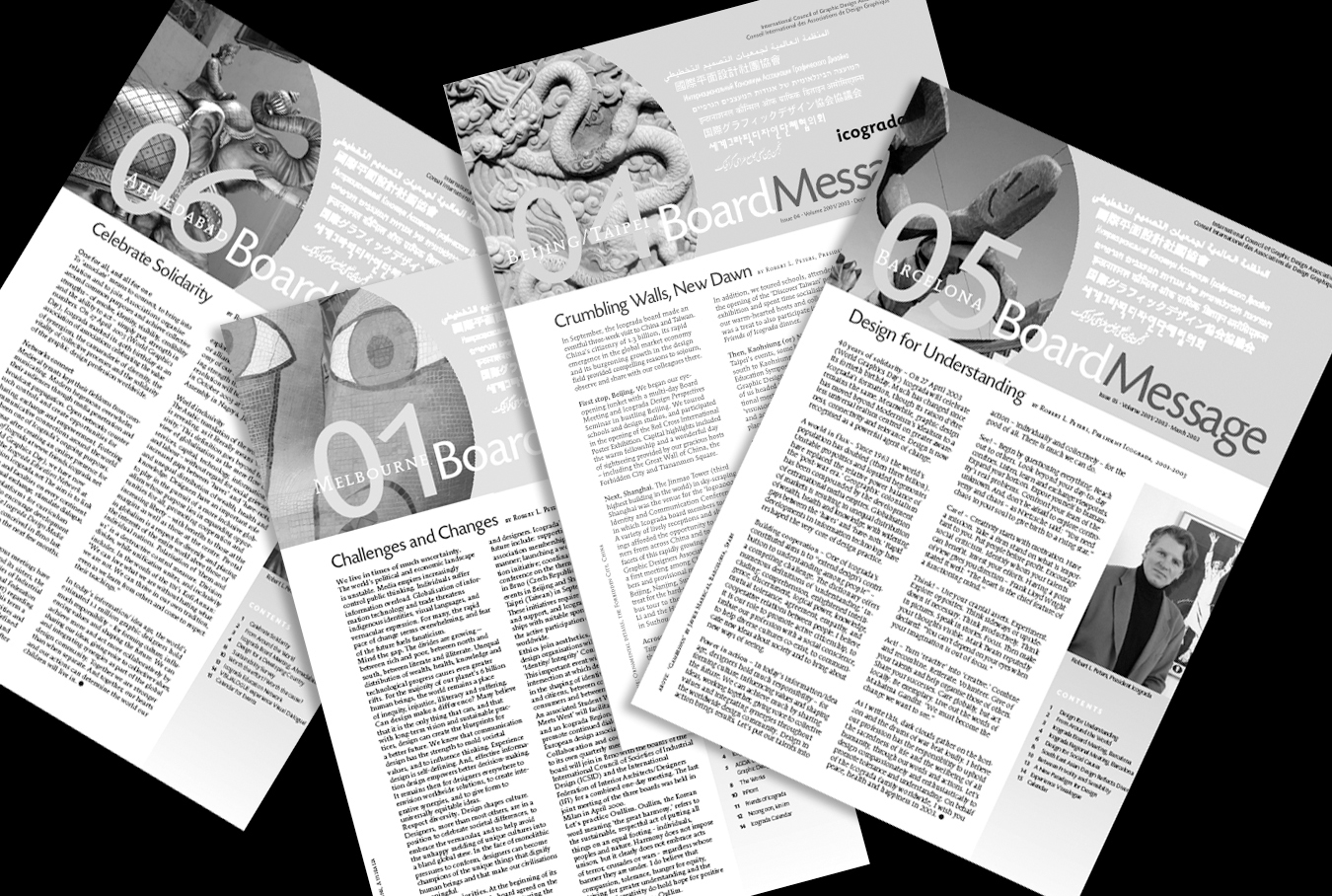
A selection of the ICoD newsletter from the early 21st Century
Since 1964, the founders of the Council have prioritised establishing an archive and library. For many years, volunteers diligently collected an audio-visual archive, including original design examples, slides, films, and lecture recordings. The Secretariat also amassed a vast collection of publications from around the world, encompassing books, magazines, journals, and catalogues, all of which hold significance to the profession and the Council.
In 2003, the Council entered into a long-term agreement with the Design History Research Centre Archives at the University of Brighton, UK, to host the Icograda Archive. This led to the transfer of 145.11 linear metres of documentation, publications, approximately 1,500 posters, and over 800 books and journals to the University of Brighton in the early 2000s.
Today, the Archive houses a substantial body of documentation related to the Council’s governance, administration, and educational activities. Regularly, the Council’s Secretariat ships batches of relevant material for archiving. The University of Brighton provides the necessary resources, experienced full-time curatorial staff with expertise in both physical and digital archival developments, and solicits funding for research. This ensures the preservation and accessibility of the Council’s and the profession’s history for future generations of practitioners and researchers.
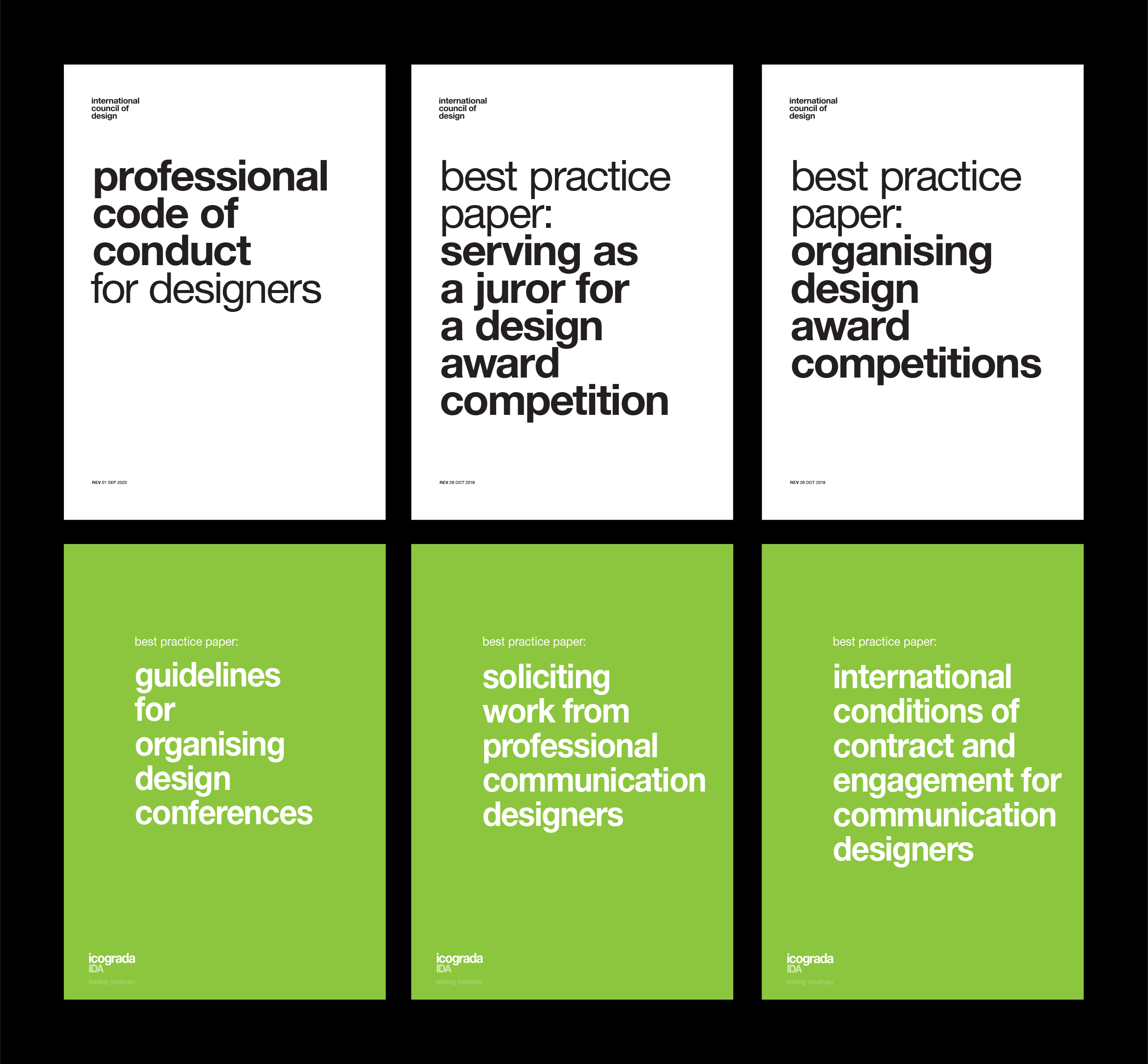 Selected Best Practices Documents by ICoD
In 2012, a group of former presidents established the ICoD Legacy Initiative, which aims to support the Council’s fiftieth anniversary celebrations in 2013. It seeks to build an ongoing collection of digitised material that captures the Council’s legacy through the eyes, experiences, and visions of various individuals. The initiative’s goal is not to duplicate the existing archival collection at the University of Brighton but to enhance it with anecdotal recollections, reflections on personal experiences, and insights from these individuals.
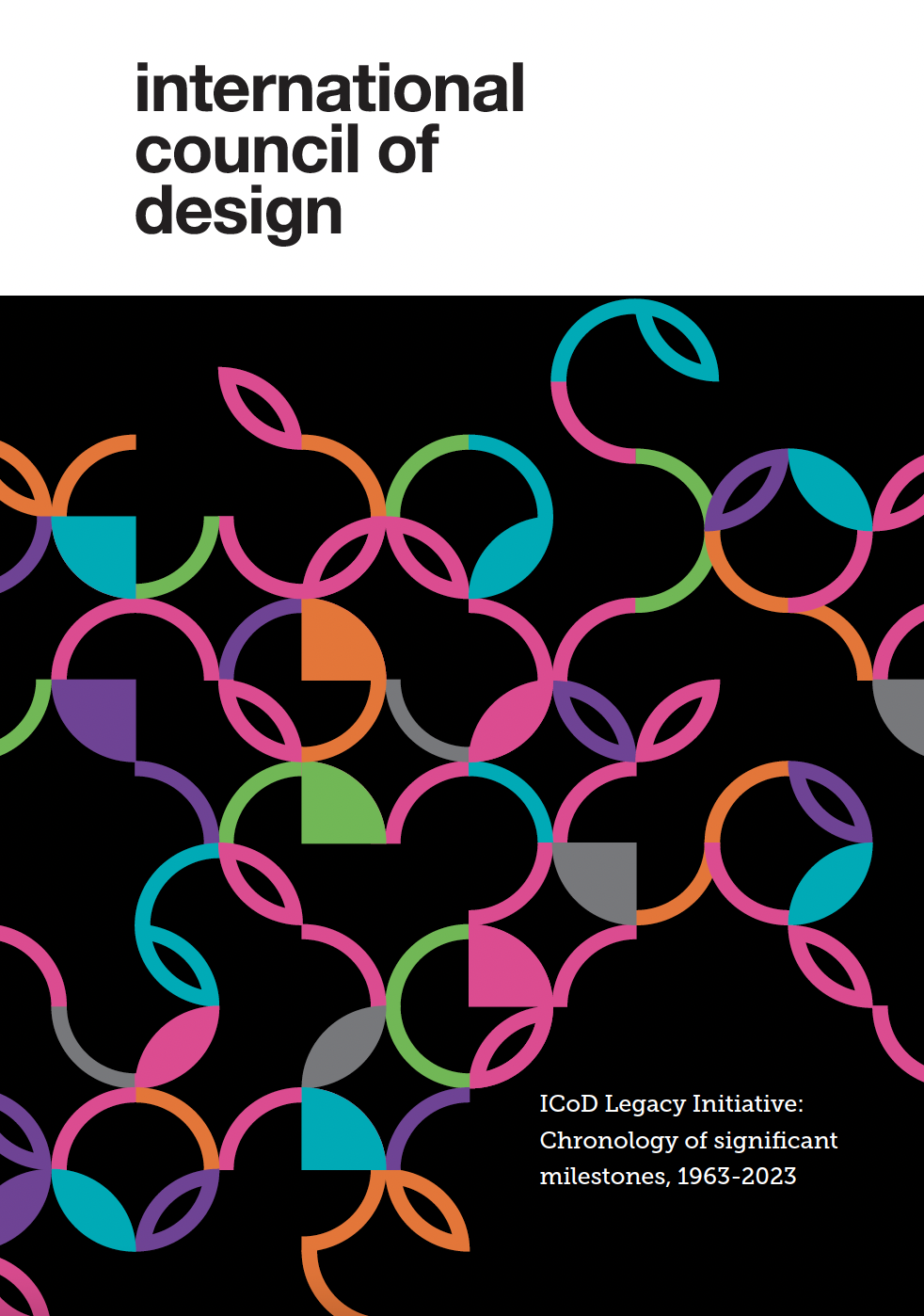
Cover of "ICoD Legacy Initiative: Chronology of significant milestones, 1963–2023, first published on the occasion of ICoD's 50th anniversary.
Since 1965, the Council has compiled various catalogues of design publications worldwide. Sharing these databases was crucial for design practice and education before the internet. In 2002, the Council hosted a founding workshop in Brno, Czech Republic, involving representatives from 23 publications globally. They agreed to establish the International Design Media Network (IDMN), overseen by the Council, and develop a code of ethics for design publications. The IDMN officially launched in Istanbul in 2004 and now has a dedicated space on the ICoD website. Furthermore, IDMN members regularly provide editorial content to the Council, which is then re-published in the Council’s newsletters and website. This benefits the Council’s member organisations and wider networks.
The Council has invested considerable resources in fostering scholarly research. This has led to the publication of three iterations of journals dedicated to pushing boundaries and offering a global perspective on the future of design. The first, Icographic, ran from 1971 to 1978 (fourteen editions) and garnered international attention for its groundbreaking content. The second, Iridescent, published from 2009 to 2014, focused on developing communication design education by integrating theory, practice, and research. The third, Communication Design: Interdisciplinary and Graphic Design Research, co-published with Routledge from 2015 to 2017, explored new directions in contemporary design practice and research. Starting in 2025, the Council aims to collaborate with scholarly publications within the IDMN to publish research that advances the design profession’s multi- and interdisciplinary discourse.
It’s also worth noting that a pilot project launched in 2006 led to the creation of the International Indigenous Design Network (INDIGO) in 2007. This network comprises a community of interest within the Council’s members who engage with indigenous knowledge and the interests of First Nation Peoples, particularly their role in the design profession. This collaboration resulted in the development of INDIGO’s cornerstone project, the International Indigenous Design Charter, which was launched in 2018 [26].
Since the early 1990s, the Council has embraced digital communication technologies like email, Listserv, and later the World Wide Web as primary platforms. Few contemporary designers understand how work operated before these technologies. The first website prototype, Icograda-space, was a research project by Middlesex University in 1998. The Council’s first official website launched on World Design Day in April 2000. It has since undergone numerous major updates and remains a vital resource for Council members and the wider design community and affiliates.
Conclusion: Imagined futures
Reflecting on my almost three decades with ICoD, I felt it was fitting to conclude by sharing some thoughts. The Council has profoundly impacted my career and development in countless ways. I hope some readers will be inspired to embark on their own long-term journeys with organisations like ICoD.
Organisations join the Council primarily to participate and contribute to the development of the profession. However, it’s worth noting that despite its organisation-based membership structure, the Council also offers individuals a wealth of invaluable benefits. Speaking on behalf of many former Board members, including those who served as liaisons for member organisations participating in GAs and those involved in organising special projects and events, I believe the most significant benefit we gained was becoming part of a nurturing and highly diverse community of friends who share common values. The Council’s activities have fostered thousands of lifelong friendships and networks transcending geographic, language, cultural, and economic boundaries. Furthermore, it has nurtured and advanced the careers of many individuals, particularly through mentorship. This is evident in the fact that many like myself have risen to leadership roles within the Council, national design organisations, and as advisors to prominent civil society, cultural, economic, and governmental bodies and institutions.
When my term as Past President came to an end in 2009, I was asked to present final remarks to the GA 23 in Beijing. I reflected on my journey as the youngest ICoD President, driven by an ambitious agenda to rejoin the ranks of regular members. My retirement address, titled “Imagined Futures,” urged the next generation of Member representatives and the newly elected Executive Board to embrace their responsibility to envision and leap into the future. I encouraged them to consider how designers could further our global impact. I shared my experiences from approximately 60 trips to various parts of the world on ICoD business since 1999. A key lesson I have learned is the importance of cultivating humility and respect for humanity’s fragility. Throughout my tenure, I have witnessed significant events, including the terrorist attacks on 9/11 when I chaired the opening of the Icograda Congress in 2001. I also travelled through the Middle East during the Second Gulf War and provided emotional support to Members affected by natural disasters such as a devastating tsunami in Asia and a major earthquake in China.
In conclusion, I wish to quote my dear friend and internationally regarded designer and scholar, Don Ryun Chang, who became the Council President when my term ended in 2009. Don states: “A precious Korean word that I often introduce at … events is Kedarum, which is the term to express ‘attained wisdom’ that we discover by experiencing many diverse encounters. Thus, one of the important Kedarums I realised was that designers in Asia, Europe, the Americas, Africa, and Oceania all have similar concerns and aspirations, and that valuable cultural design dynamics are organically innate and always transcending” [27].
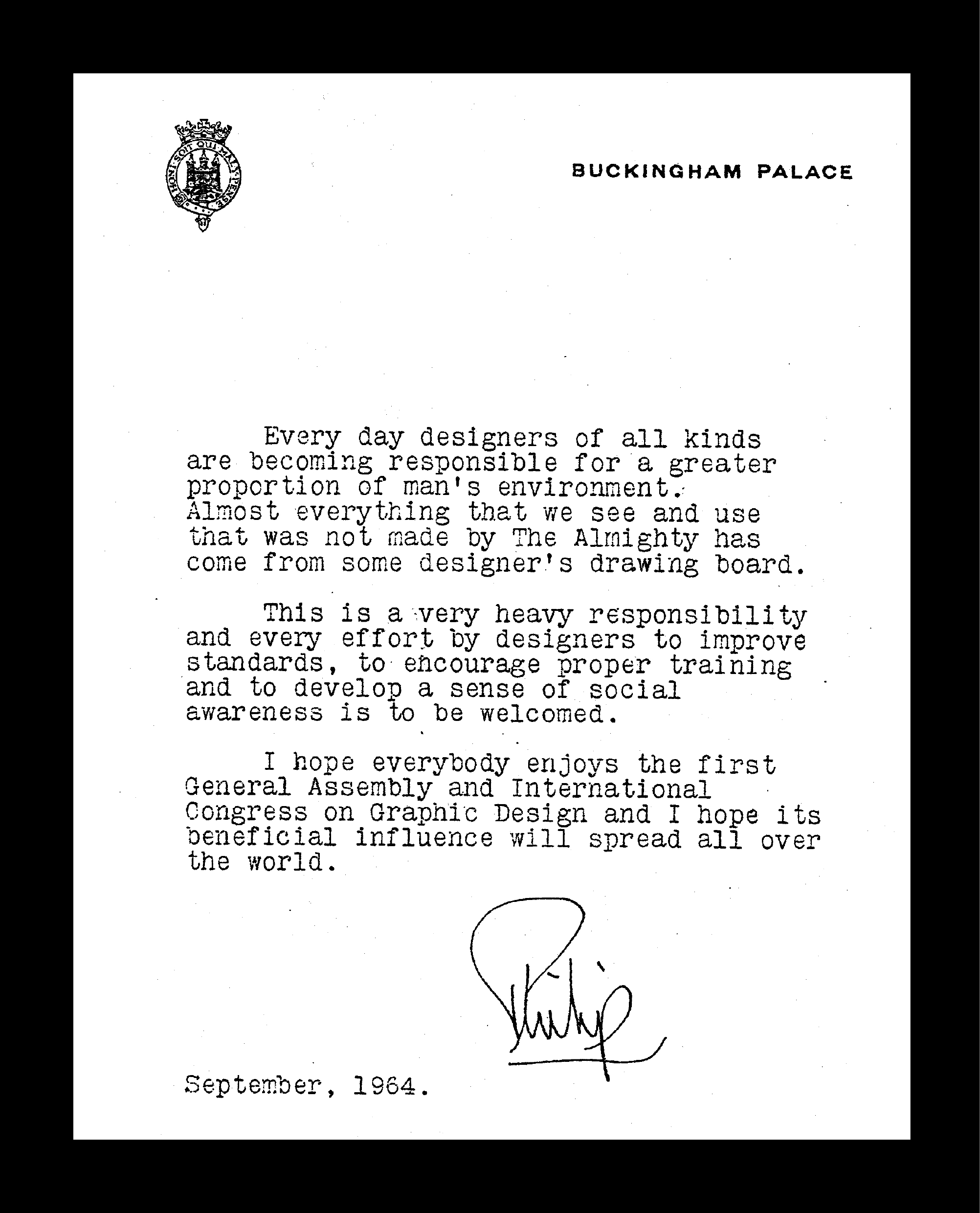 A message from Prince Philip, Duke of Edinburgh, at the opening ceremony of the first Icograda conference in 1964
It’s also fitting to conclude with a statement from HRH Prince Philip, then Duke of Edinburgh, delivered at the opening of the first Icograda Congress in 1964. He observed that “[e]very day designers of all kinds are becoming responsible for a greater proportion of man's environment. Almost everything that we see and use that was not made by the Almighty has come from some designer's drawing board. This is a very heavy responsibility, and every effort by designers to improve standards, to encourage proper training, and to develop a sense of social awareness is to be welcomed”.
ENDNOTES
1. Design Council, [O]. www.designcouncil.org.uk/who-we-are/our-history/timeline/. Accessed December 2024.
2. Many of these institutions and bodies changed names over the course of time.
3. Er, A. 2023. International Design Organizations: Histories, Legacies, Values. Journal of Design History, Volume 36, Issue 3, September, pp 319–321.
4. Ansley, J. Clark, AJ. and Messell, T. (eds.) 2022. International Design Organizations: Histories, Legacies, Values. Bloomsbury Visual Arts: London.
5. The acronym changed to accommodate social media requirements for hashtags – hyphenations cannot be used.
6. Peter Kneebone, [O]. www.peterkneebone.com/post/advocate
7. Born of Serbian-Austrian parentage in Vienna, educated in Austria, established his first design practice in Belgrade before emigrating to the UK in 1939.
8. Sakane, S. 1990. Icograda: the first 25 years. In Graphic Design, World Views: ICOGRADA'S 25th Anniversary. Edited by Jorge Frascara. Kodansha: Tokyo.
9. The Council’s physical secretariat was first based in London (UK) from 1963, before moving to Brussels (Belgium) in 1999, and then to Montréal (Canada) in 2005. In May 2026 the Council announced that the secretariat is relocating to Vilnius (Lithuania).
10. At the 1970 DRUPA Congress in Dusseldorf, the Icograda Standardisation Commission proposed the adoption of a unified typographic measurements system as an international standard. DRUPA was established in 1951 and remains the world’s largest printing equipment exhibition in the world.
11. The secretariats were then based in Helsinki (ICSID), Brussels (Icograda) and Johannesburg (IFI) at the time.
12. Non-voting member categories or ‘para-members’ such as Provisional Members, Affiliates, Friends and IDMN have never been included in the Council’s official membership counts.
13. International Council of Design, 2024. ICoD GA Report 2024. Unpublished document available only to the Council’s members and officials.
14. Negus, D. 1993[O]. Obituary: Willy de Majo. Available: https://www.independent.co.uk/news/people/obituary-willy-de-majo-1512513.html
15. The data mentioned here were sourced from the author’s personal archive of unpublished Secretariat administrative records, and Executive Board meeting reports compiled in 2003.
16. The numbers mentioned here are based on the information posted in Member profiles on the ICoD website or on Member’s websites.
17. Bureau for European Design Associations, [O]. Available: https://beda.org/member/deutscher-designtag-dt/
18. Bureau for European Design Associations, [O]. Available: https://beda.org/member/design-council/
19. US Bureau of Labor Statistics, [O]. Available: https://www.bls.gov/ooh/arts-and-design/graphic-designers.htm
20. US Bureau of Labor Statistics, [O]. Available: https://www.bls.gov/ooh/arts-and-design/interior-designers.htm
21. US Bureau of Labor Statistics, [O]. Available: https://www.bls.gov/ooh/arts-and-design/industrial-designers.htm
22. Gigexchange, [O]. Available: https://gigexchange.com/job-market/design-industry-report
23. IBIS World, [O]. Available: https://www.ibisworld.com/united-states/industry/graphic-designers/1412/
24. NMSC, [O]. Available: https://www.nextmsc.com/report/graphic-design-market
25. International Council of Design, [O]. Available: www.theicod.org/resources/icod-position and www.theicod.org/en/resources/news-archive/say-no-to-spec-competitions.
26. The administration of the INDIGO Network was formally transferred in 2016 from the Council to Deakin University (Australia).
27. Chang, DR. 2023. Foreword: Kedarum. In ICoD Legacy Initiative: Chronology of significant milestones, 1963-2023. PDF publication by ICoD.
About the author
Jacques Lange is a South African communication designer, curator, educator, researcher, and a committed advocate for the design professions. He joined the ICoD Executive Board in 2001 and served as President from 2005 to 2007. He was also a member of the Committee of Former Presidents from 2013 to 2024 and recently served as a project advisor to the ICoD Board.
relatedarticles
"Leading Creatively" by Don Ryun Chang

ICoD exclusive interview with kyle rath on design and AI

robert l. peters: guiding the future of design